
Why an Orangery Is Better Than a Conservatory During a UK Heatwave
Every summer, the same thing happens. Temperatures hit 28°C and your conservatory becomes unusable. It’s too hot to sit in, too hot to work in, and too hot to leave a child in for five minutes without them melting into the sofa.
The problem is going to get worse. The Met Office expects summer temperatures to continue rising across the UK, with heatwaves becoming more frequent and more intense over the coming decades. If your conservatory is already unusable at 28°C, it will be even more so when 32°C becomes routine.
Why Conservatories Become Greenhouses in Summer
A conservatory is mostly glass. Large windows, glass roof, minimal insulation. This maximises sunlight, which is lovely in April. It's a problem in July.
When the sun beats down, all that glazing traps heat. Even modern glass struggles. You're looking at temperatures 5–10°C hotter inside than outside — sometimes more if the sun is directly overhead.
Ventilation helps, but it's not enough. Open the windows and you're relying on cross-breeze that may not exist. Add a fan and you're just moving hot air around. The room stays uncomfortable and largely unused from June through August.
How an Orangery Stays Cool When a Conservatory Doesn't
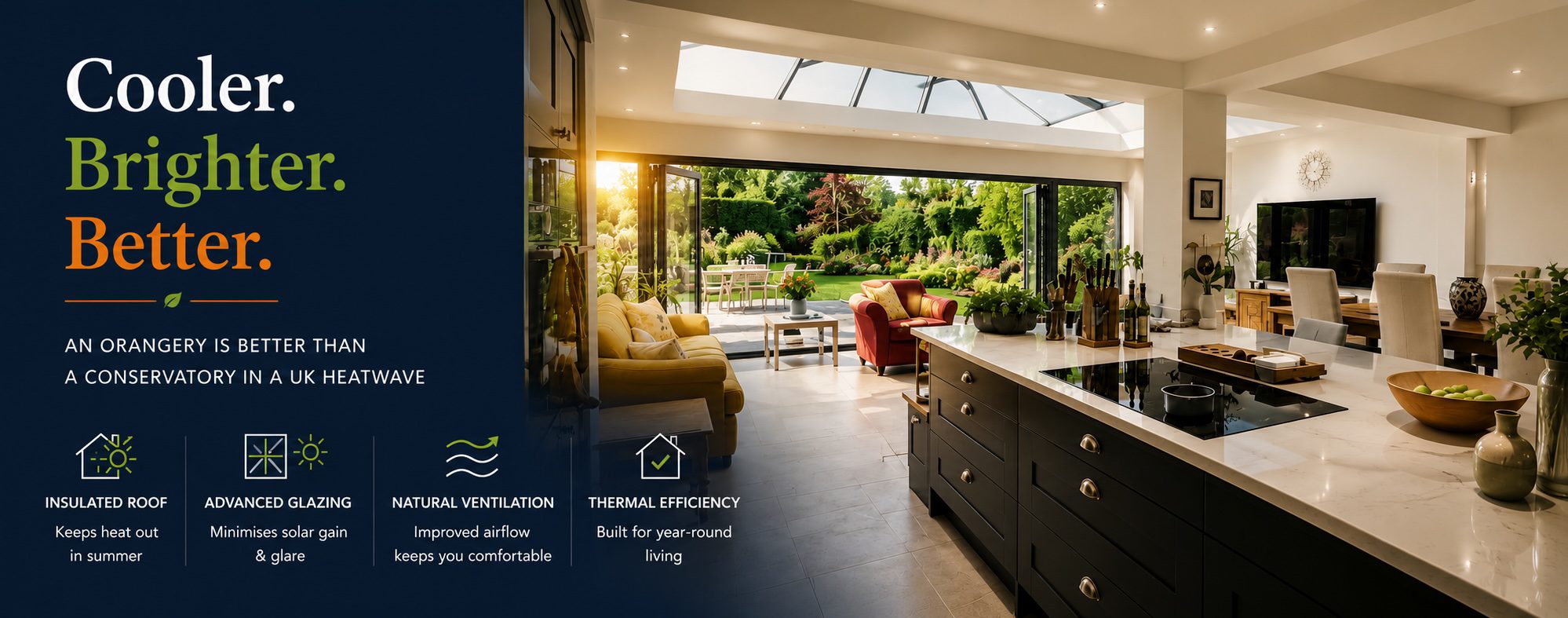
An orangery is built completely differently. Instead of relying on a fully glazed roof, it combines insulated walls and roofing with carefully positioned glazing and a roof lantern. The lantern provides light without exposing the entire roof to direct sun.
Several things work together to keep it comfortable:
Advanced glazing technology
- High-performance glass minimises solar heat gain while allowing natural light
- Reflective or tinted glazing on south-facing panes reduces unwanted heat
- Insulated frames prevent heat loss and gain at the edges
Structural design
- Insulated roof construction significantly reduces heat transfer
- Solid brick or rendered walls don't absorb and re-radiate heat like glass
- Lantern placed centrally rather than covering the entire roof
Natural ventilation
- Automated roof vents (opening at 25°C) let hot air escape
- Large bifold doors create natural airflow when opened
- Multiple windows allow cross-ventilation without forcing air movement
The result: an orangery stays at a comfortable temperature during summer. Not cold, not overheated. Just usable.
A Room You Actually Use During Hot Weather
A well-designed orangery remains a comfortable living space when temperatures soar. Whether you're working from home, eating meals, entertaining guests, or just relaxing, an orangery provides natural light without becoming unbearably warm.
Most homeowners find their orangery quickly becomes the most-used room during summer because it offers something conservatories don't: year-round comfort.
The Bigger Picture: Summer and Winter Both Work
While summer heatwaves expose the weakness of older conservatories, winter reveals another problem: they're frequently too cold to enjoy.
An orangery solves both issues. With insulated structures, high-performance glazing, and proper construction, your space remains:
- Comfortable during summer heatwaves
- Warm during winter without excessive heating
- Energy efficient all year
- Suitable for everyday living, not just occasional use
This makes an orangery a genuine extension of your home rather than a seasonal room you use for three months.
Converting Your Conservatory: A Better Solution (Before It Gets Worse)
If you have an older conservatory that spends summer unused, conversion into a modern orangery is worth considering — especially as temperatures are forecast to rise further. Existing footings and dwarf walls can often be retained, which reduces costs and disruption significantly.
The Met Office predicts warmer, more frequent heatwaves. An orangery built to current standards will handle tomorrow's temperatures far better than a conservatory struggles with today's. It's future-proofing your home while improving it now.
I've designed conversions across Surrey — from Peaslake to East Horsley — where tired conservatories have been transformed into beautiful, practical spaces built for modern living. The difference in usability is night and day.
A bespoke orangery in Surrey typically costs from £60,000–£80,000 for a smaller design, £80,000–£120,000 for a medium-sized orangery, and £115,000–£170,000+ for larger or more complex projects. Conversion costs depend on the existing structure and your final design.
Enjoy Summer Without Compromise
If your conservatory feels more like a greenhouse than a living room during hot weather, it's time to consider a better solution.
A bespoke orangery from Surrey Orangery provides the light and garden views you love, combined with the comfort, insulation, and practicality that actually living in the space demands — every season.
Contact Surrey Orangery to discuss how an orangery extension or conservatory conversion could transform your home into a space you'll enjoy every single day of the year.
Frequently Asked Questions
Why do conservatories overheat?
Conservatories are mostly glass — walls and roof. This causes excessive solar heat gain in summer. Even modern glazing struggles to keep temperatures comfortable when the sun is directly overhead.
How does an orangery stay cooler?
An orangery combines insulated walls and roofing with carefully positioned glazing and a roof lantern. Advanced glazing minimises unwanted solar gain while allowing natural light. Automated roof vents and large doors create natural airflow.
Can I convert my conservatory to an orangery?
Yes. Existing footings and dwarf walls can often be retained, reducing costs and disruption. It transforms a seasonal room into a space you'll use year-round.
What does an orangery conversion cost?
A bespoke orangery in Surrey typically costs from £60,000–£80,000 (small), £80,000–£120,000 (medium), and £115,000–£170,000+ (large) in 2026. Conversion costs depend on the existing structure and final design.