
Kitchen Orangery Extension
The kitchen has long been considered the heart of the home. It’s where families gather in the morning, where children do homework at the table, and where evenings end with conversation over a glass of wine. For many Surrey homeowners, the challenge isn’t the kitchen itself it’s the space around it. A kitchen orangery extension solves that problem elegantly, creating room to breathe without losing the warmth and character that makes your home yours.
Unlike older conservatories that became unusable in summer heat or winter cold, a modern kitchen orangery extension is designed for year-round living. With solid brick walls, insulated columns, a central roof lantern and high-performance glazing, it performs as a proper room not an afterthought bolted onto the back of the house.
This guide covers everything Surrey homeowners need to know before starting a kitchen orangery project: the design options, what to expect on cost, whether you need planning permission, and how to choose the right builder for the job.
What Is a Kitchen Orangery Extension?
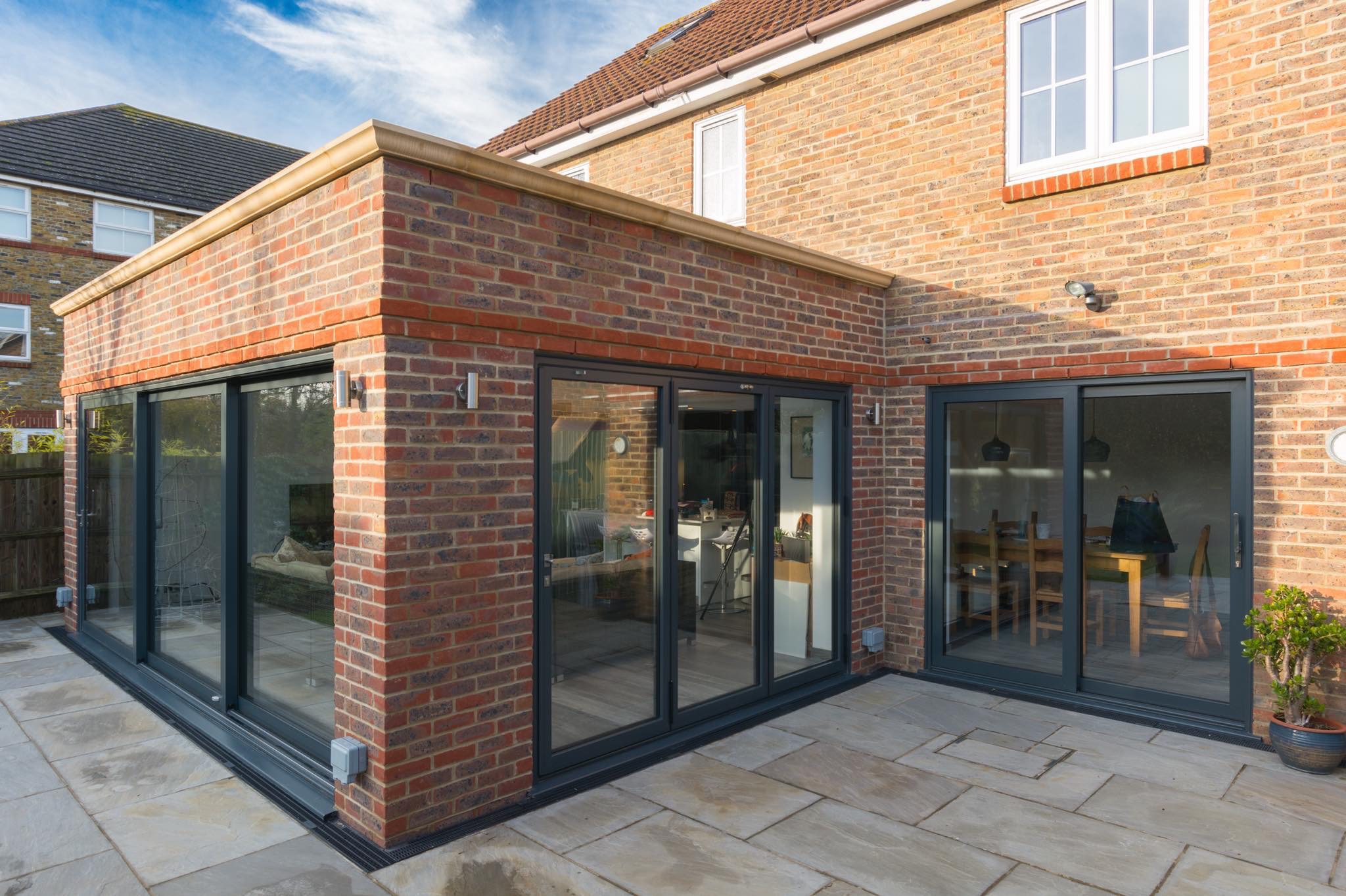
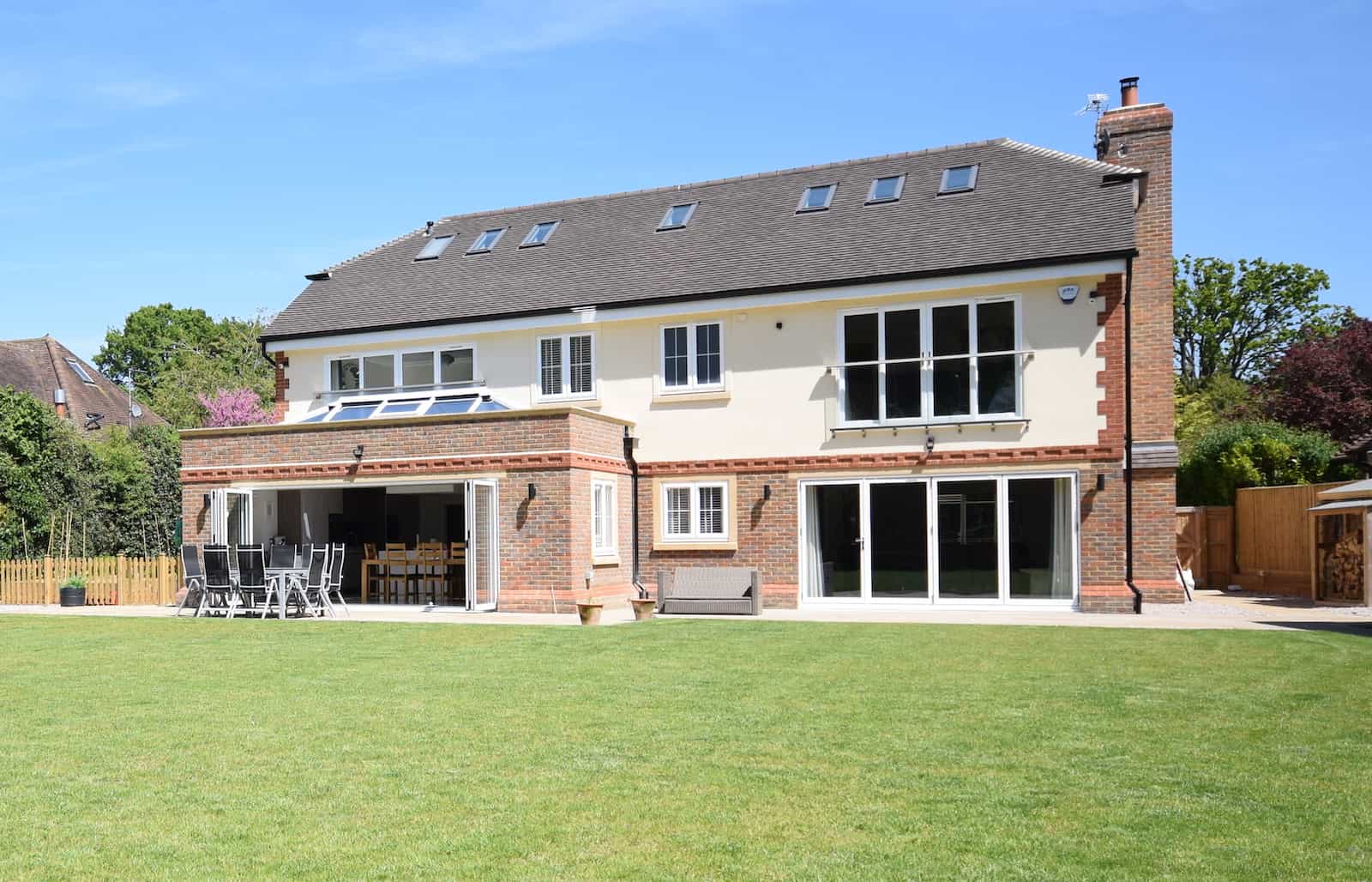
A kitchen orangery extension is a single-storey rear extension that combines the structural solidity of a traditional brick extension with the light and openness of a glazed structure. Unlike a conservatory, which is predominantly glass, an orangery uses solid brick walls and decorative columns, with large windows and a signature central roof lantern that floods the interior with natural light.
The result is a space that feels like a genuine addition to your home: warm in winter, comfortable in summer, and completely connected to both the existing kitchen and the garden beyond. For open-plan kitchen-diner layouts, an orangery is increasingly the preferred choice over a standard single-storey extension.
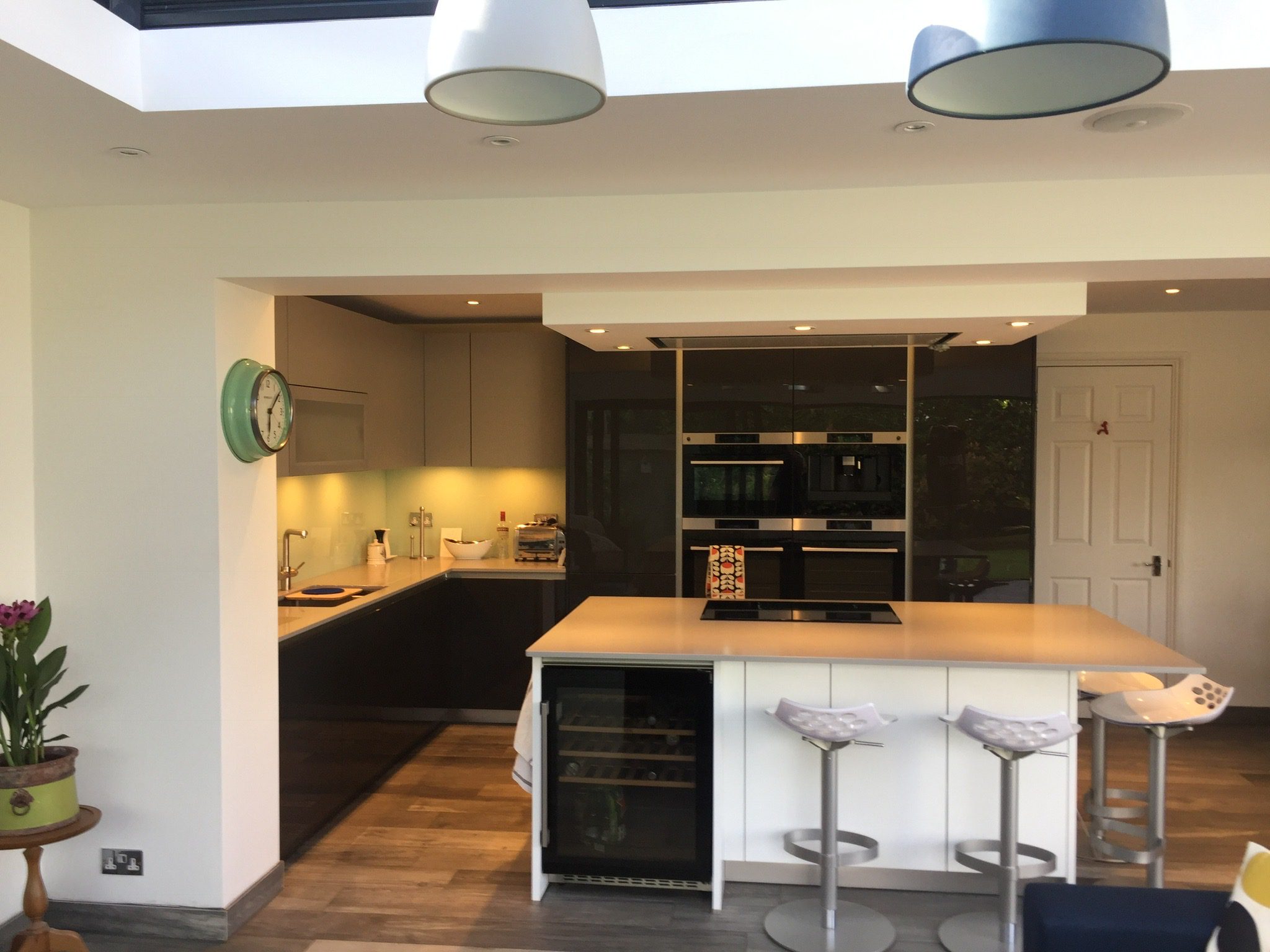
Key Features of a Kitchen Orangery
- Central roof lantern — draws natural light deep into the room and creates an architectural focal point above the dining or island area
- Solid brick walls — matched to your existing property for a seamless, permanent look
- Insulated columns — structural, thermally efficient, and decorative — the detail that separates an orangery from a basic extension
- Full-height glazing — floor-to-ceiling windows on the garden-facing wall create uninterrupted views and indoor-outdoor flow
- Bifold or sliding doors — opening the entire rear of the kitchen to a terrace, patio or garden in warmer months
- Underfloor heating — working quietly beneath the floor to maintain comfort without bulky radiators interrupting the glazed walls
Why Surrey Homeowners Choose a Kitchen Orangery Over a Standard Extension
A traditional single-storey brick extension and a kitchen orangery extension are similar in construction, but very different in feel. The difference comes down to light, character and connection.
A standard extension has a solid flat or pitched roof, which means the only natural light enters through windows in the walls. An orangery's roof lantern changes everything: light falls vertically from above, filling the centre of the room in a way that no side window can replicate. It creates a sense of space and airiness that makes the kitchen feel substantially larger than it is.
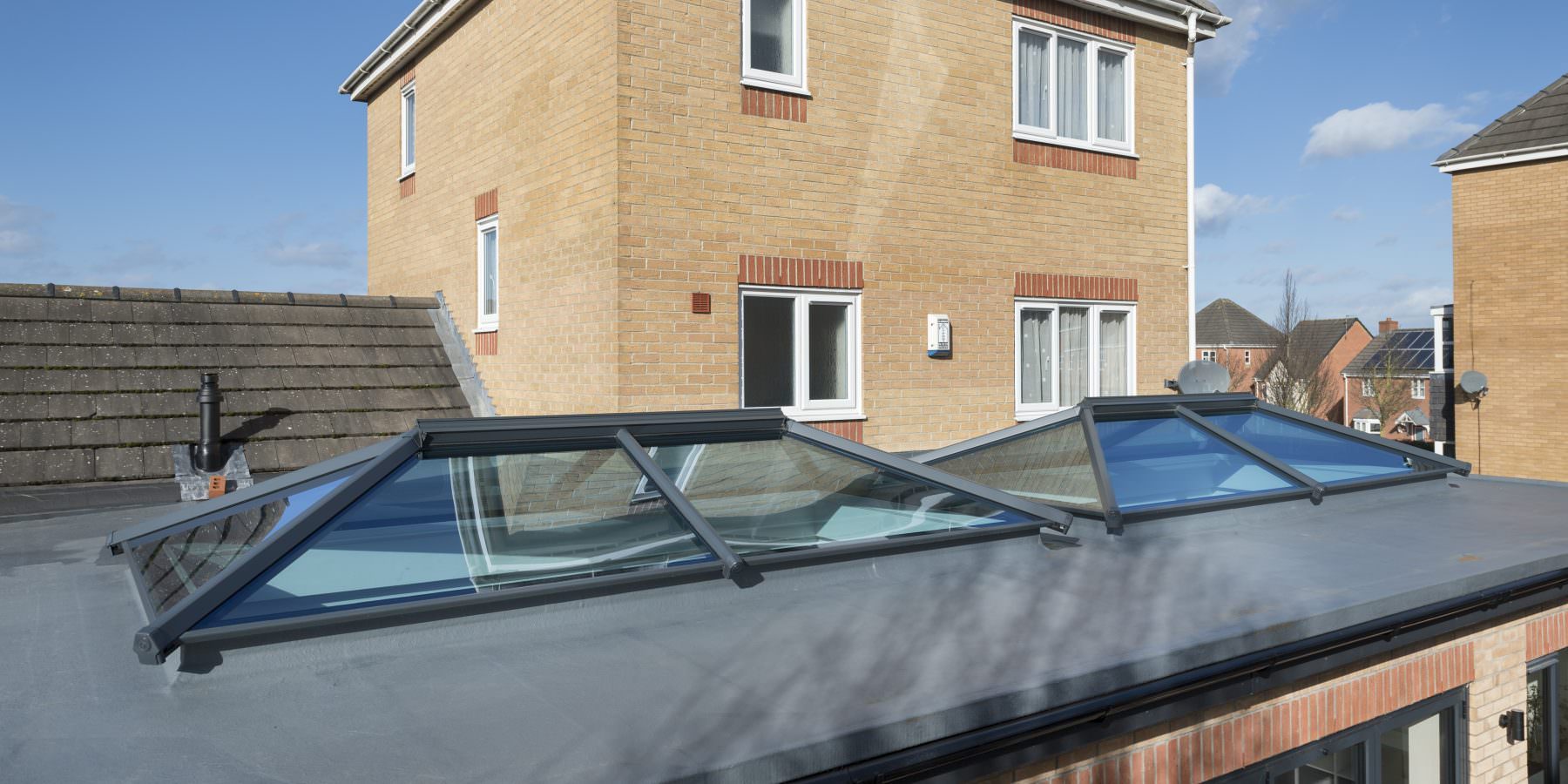
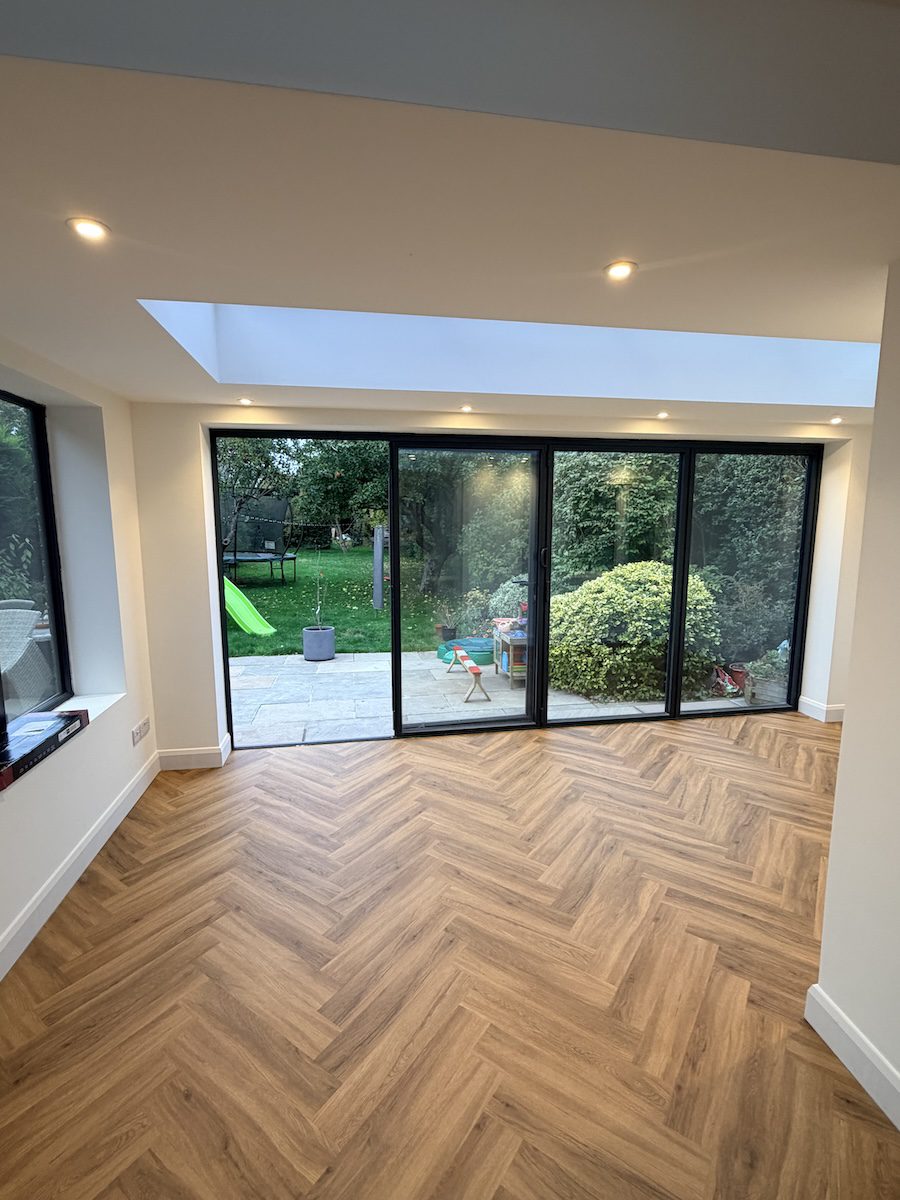
Surrey homeowners also note that an orangery extension feels more architectural and characterful than a standard extension. The insulated columns, the cornice detail, the lantern — these are design features that give an orangery a presence a plain extension rarely achieves. And because brickwork is matched to the existing property, the result looks as if it was always part of the original house.
From a value perspective, a kitchen orangery extension in Surrey delivers a strong return. With Surrey property values significantly above the national average, adding a well-designed open-plan kitchen-diner with an orangery can add considerably more in absolute terms than the same improvement would achieve elsewhere in the country.
Kitchen Orangery Design Ideas for Surrey Homes
One of the great strengths of an orangery extension is its flexibility. The same structural approach can result in very different aesthetics depending on the style of your home and the materials chosen. Here are the most popular approaches we see across Surrey.
1. Open-Plan Kitchen-Diner with a Central Island
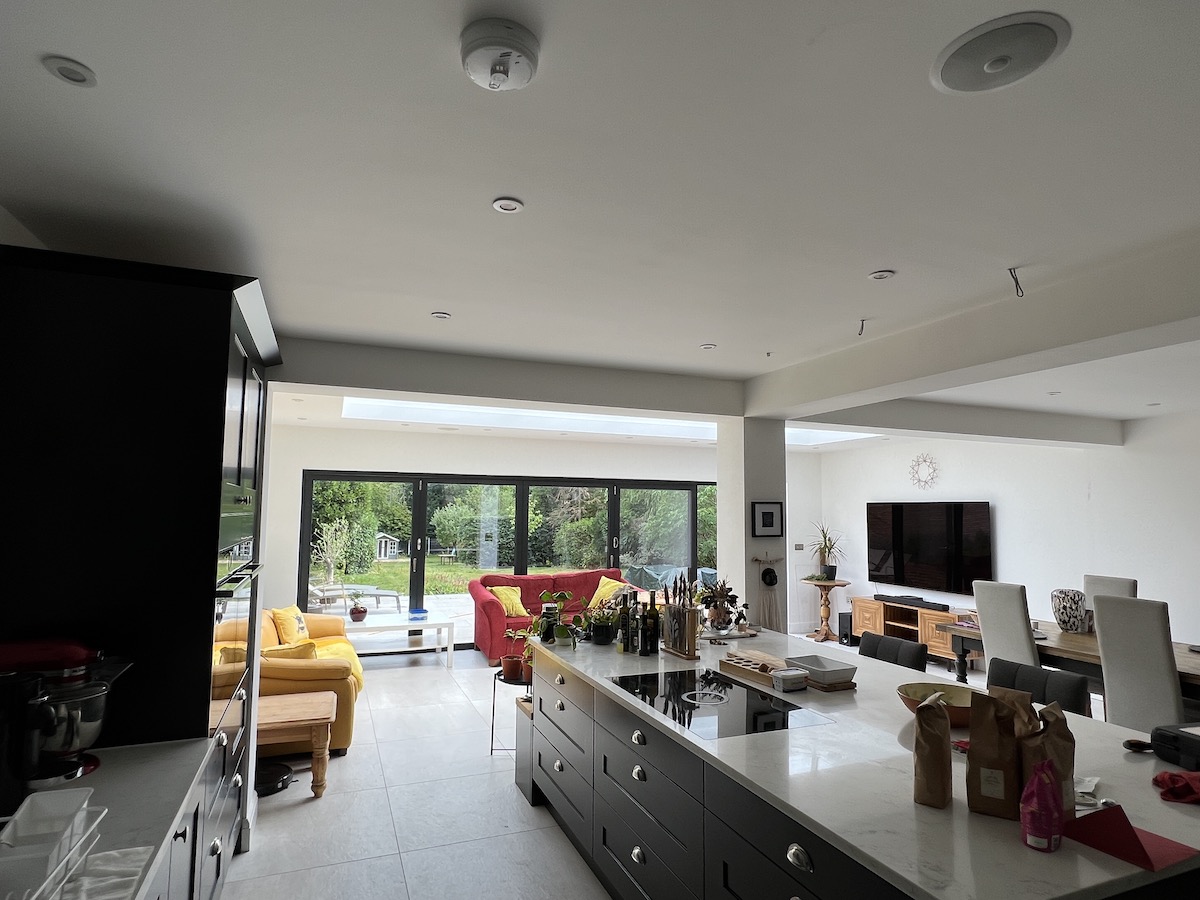
The most popular configuration for Surrey homes. The kitchen occupies the original back room, with the orangery extension housing a large dining area and a central island positioned directly beneath the roof lantern. Bifold doors across the full width of the rear wall connect the dining area directly to the terrace or garden.
2. Contemporary Orangery Kitchen for a Modern Surrey Home
For newer properties or homes with a clean, modern aesthetic, a contemporary orangery is an excellent choice. Contemporary orangeries focus more on glass and open space, with full-height windows producing clear and open views, creating a light and airy space with a sleek, uncluttered finish. A roof lantern is typically the most distinctive feature, sitting above a flat warm deck roof to maximise energy efficiency. Surrey Orangery supplies the latest glazing options — including double glazing, triple glazing, and self-cleaning glass — working to the requirements and budgets of homeowners across Cobham, Weybridge, Guildford and the wider Surrey area.
3. Traditional Orangery Kitchen for a Period Property
Surrey has an abundance of Victorian, Edwardian, and inter-war period properties — and a traditional orangery extension respects that character beautifully. Stone or brick columns, a decorative cornice, and a heritage-style roof lantern complement the existing architecture without competing with it. This approach suits properties in Dorking, Reigate, and the Surrey Hills villages particularly well.
4. Timber Orangery Kitchen for a Natural Finish
For homeowners who want warmth and character above all else, a timber orangery extension offers the natural beauty of hardwood or engineered timber. Paired with stone flooring and a wood-burning stove, a timber kitchen orangery creates an atmosphere of organic luxury — and is the preferred choice for properties in conservation areas across Surrey.
How Much Does a Kitchen Orangery Extension Cost in Surrey?
The following table gives realistic cost ranges for Surrey in 2026. Note that Surrey and the wider South East carry a labour premium of approximately 15–25% compared to the UK national average.
| Size | Specification | Estimated Cost (Surrey, 2026) |
|---|---|---|
| Small (3m × 4m) | Brick-built, standard glazing, roof lantern | £35,000 – £45,000 |
| Medium (4m × 5m) | Brick-built, high-performance glazing, bifold doors | £45,000 – £65,000 |
| Large (5m × 6m+) | Brick-built, timber frame detailing, premium glazing | £65,000 – £90,000+ |
| Bespoke / open-plan | Full spec incl. underfloor heating & bifolds | £80,000 – £120,000+ |
What Affects the Cost of a Kitchen Orangery in Surrey?
- Size: Larger footprints cost more, but cost per m² decreases as the extension grows
- Materials: Glazing specification, frame detailing, and brick type all affect the overall cost — bespoke and heritage finishes carry a premium
- Glazing specification: Triple glazing, solar control and self-cleaning glass add upfront cost but reduce running costs
- Ground conditions: Clay soils, drainage issues and nearby trees can affect foundation costs — common across parts of Surrey
- Door specification: Bifold doors cost significantly more than French doors but transform the garden connection
- Internal finishing: Underfloor heating, LED pelmet lighting, and plastered soffits elevate the finish considerably
Do You Need Planning Permission for a Kitchen Orangery Extension in Surrey?
In most cases, no. Kitchen orangery extensions in Surrey fall under permitted development rights, meaning planning permission is not required — provided the extension meets the relevant criteria.
Permitted Development Rules for Kitchen Orangeries
- Must not extend more than 4 metres beyond the rear wall of a detached house, or 3 metres for semi-detached or terraced homes
- Under prior approval (Neighbour Consultation Scheme): up to 8m (detached) or 6m (other) with neighbour consultation
- Must not cover more than 50% of the land around the original house
- Maximum height of a single-storey rear extension: 4 metres
- Materials should be similar in appearance to the existing property
Properties in conservation areas, of which Surrey has many, may have restricted permitted development rights. Listed buildings require listed building consent and should always be discussed with a specialist. Even where planning permission is not required, building regulations approval is mandatory for a kitchen orangery extension. Surrey Orangery manages all submissions on behalf of clients as part of the project process.
How Long Does a Kitchen Orangery Extension Take to Build?
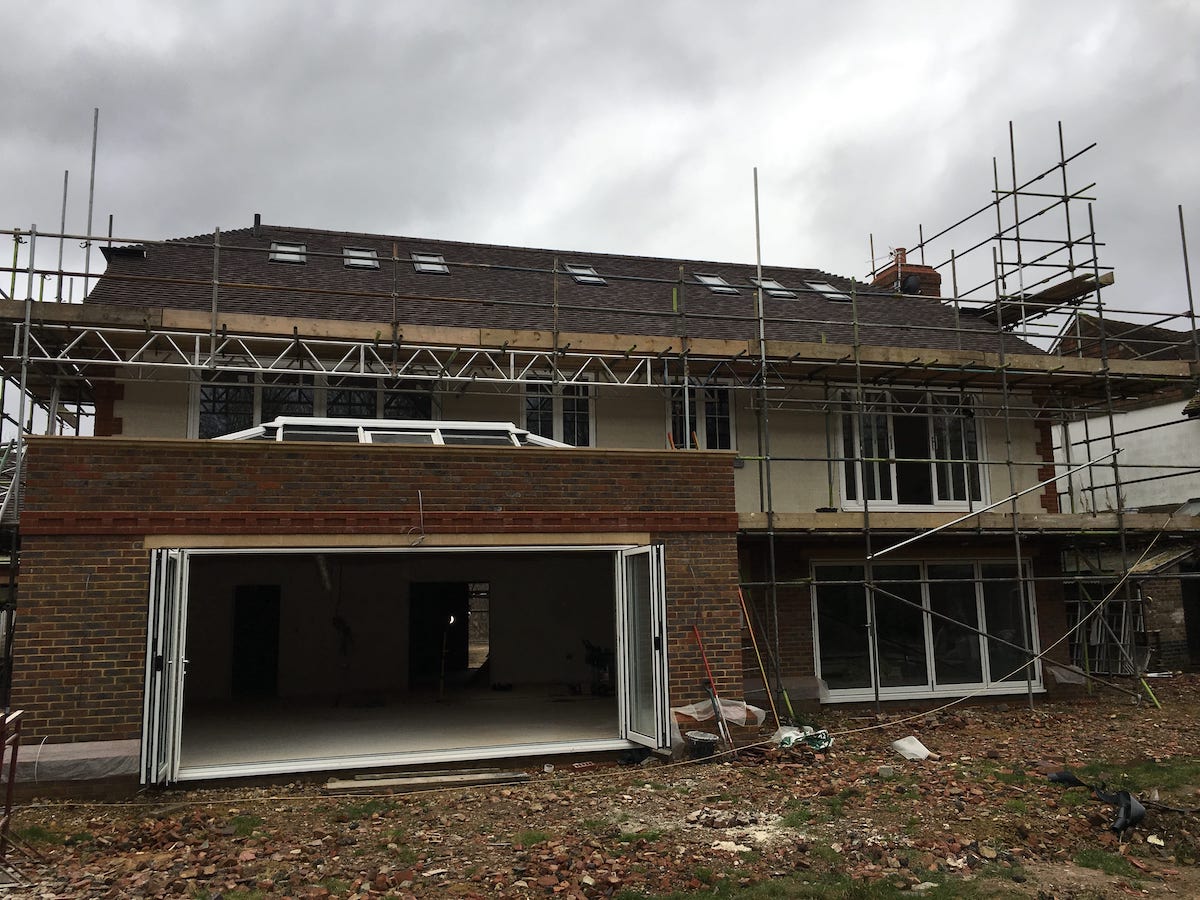
Most kitchen orangery extensions in Surrey take between 10 and 20 weeks from start to practical completion.
Typical Kitchen Orangery Build Timeline
- Weeks 1–2: Site preparation, excavation, and foundation work
- Weeks 3–5: Brickwork, structural steels, and damp-proof course
- Weeks 6–8: Frame installation, roof lantern fitting, and glazing
- Weeks 9–11: Roofing completion, electrics first fix, underfloor heating
- Weeks 12–14: Plastering, second fix electrics, internal finishing
- Weeks 15–20: Snagging, decoration, and handover
Choosing the Right Orangery Company in Surrey
A kitchen orangery extension is a significant investment. Here is what to look for when evaluating orangery companies in Surrey:
What to Look for in a Surrey Orangery Builder
- A bespoke design approach: Every Surrey home is different. A good company designs around your property, not around a product catalogue
- Local experience: Surrey has specific planning considerations, conservation area restrictions, and ground condition challenges
- Trade accreditations: Look for Surrey Trading Standards' Buy with Confidence membership, FENSA registration, or equivalent
- A portfolio of completed local work: Ask to see finished kitchen orangery projects in properties similar to yours
- End-to-end project management: The best companies handle design, planning, building regulations, construction, and snagging
- A structured warranty: A minimum 10-year structural warranty gives confidence in the long-term quality of the work
Surrey Orangery is a specialist orangery design and build company based in East Horsley, with over 60 years of combined team experience. We are members of Surrey Trading Standards' Buy with Confidence scheme and have completed bespoke kitchen orangery extensions across Guildford, Woking, Cobham, Weybridge, Reigate, Dorking and the wider Surrey area.
Frequently Asked Questions
Can I extend my kitchen with an orangery in Surrey?
Yes. A kitchen orangery extension is one of the most popular projects Surrey Orangery undertakes. It creates a bright, open-plan space connecting the kitchen to the garden, suitable for most Surrey property types including detached, semi-detached, and terraced homes.
How much does a kitchen orangery extension cost in Surrey?
A kitchen orangery extension in Surrey typically costs between £35,000 and £90,000 depending on size, materials, and specification. Surrey and the wider South East carry a labour premium of 15–25% above the UK national average. Surrey Orangery provides fixed-price proposals following a free site consultation.
Do I need planning permission for a kitchen orangery extension?
In most cases, no. Kitchen orangery extensions fall under permitted development rights provided they stay within the relevant size limits. Properties in conservation areas, listed buildings, and some Article 4 zones in Surrey may require a formal planning application.
How long does a kitchen orangery take to build?
Most kitchen orangery extensions in Surrey take between 10 and 20 weeks from groundbreaking to completion. Planning and building regulations submissions add 4–10 weeks before the build begins.
Will a kitchen orangery add value to my Surrey home?
Yes. A well-designed kitchen orangery extension typically adds 8–15% to a Surrey property's value. Buyers consistently seek open-plan kitchen-diner spaces with garden connectivity — and an orangery delivers exactly that.
What is the difference between a kitchen orangery and a kitchen conservatory?
A kitchen orangery uses solid brick walls, insulated columns, and a central roof lantern — thermally efficient and comfortable all year round. A conservatory is predominantly glass, leading to overheating in summer and heat loss in winter. For a kitchen extension, an orangery is almost always the better choice.